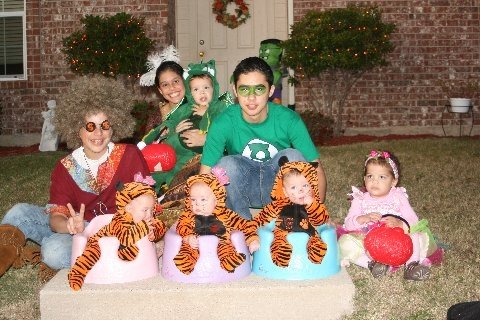
This is one of my all-time favorite photos. One big sister is missing, but it captures one of our favorite holidays—the rare kind where all my “big kids” got to spend time with all their younger siblings.
And no, if you’re new here—these are not all my biological children. But each of my two oldest is one of nine siblings. Yes, nine. While some families out there fit the traditional mold with this many kids under one roof from the same two parents… ours? Definitely not traditional. And you know what? That’s more than okay.
Let me be honest: while there are some things I’m really good at, relationships haven’t always been one of them. Mix in health challenges from a young age that forced some very adult decisions, and yes, I’ve had my wild phases. Sometimes I rushed to grow up too fast. Other times, I clung to youth with all I had. And for far too long, I tried to squeeze myself into the version of womanhood and motherhood that society said I should be—when the truth is, I simply didn’t fit.
My grandparents came from an era where marriage was forever, no matter the circumstances. My parents? A bit different. While I remember joy in my early childhood, by the time my brother left for college, my parents’ marriage had unraveled. Of course, as a kid, you always hope your parents will stay together. But growing up, I came to understand they were both much happier apart—and that was a lesson I carried into my own journey.
Divorce has gone from taboo to textbook over the decades. By the 1970s, the U.S. divorce rate hit 50%, rising through the ’80s and leveling in the ’90s. Thankfully, the numbers have been dropping—down to around 42% by 2018—but it’s still a reality for many of us. I used to beat myself up for not being “good at relationships,” but now I see things differently. Maybe I’ve been exactly where I was supposed to be all along.
Not long ago, I read an article about the idea of “three great loves” in a lifetime, and it struck a chord:
The first love is the fairy tale—the one we think will last forever. We chase it young, clinging to what society tells us love should be. We leap headfirst, not always knowing ourselves or what we truly need.
The second love is the one that teaches us the hard lessons. It’s messy, painful, and revealing. We think we know more now—and maybe we do—but it’s here that we confront the truths we tried to ignore.
The third love is unexpected. It comes when we’re real with ourselves, when we’ve stopped performing. This love sees us as we are and says, “You’re enough.” It’s messy too—but beautifully honest.
Not everyone fits into that mold. Some people only have one or two. One of the most beautiful love stories I’ve ever seen is a couple who married young, had three daughters, and are still each other’s best friend to this day. I admire them deeply.
As for me? I’ve experienced different kinds of love—each one important, each one shaping me into the woman I am now. And while none of them were perfect, they were all real. And they led me to the big, loud, joyful family I have today.
For a long time, society liked to call families like ours “dysfunctional.” That word always rubbed me the wrong way. It slapped a label on something my children didn’t choose—and one that didn’t reflect how hard we’ve worked to make it function beautifully. These kids have adapted, opened their hearts to new people, and learned that love doesn’t have to fit inside neat little boxes. They’ve seen their parents with real flaws and real strengths—and I believe it’s made them stronger, kinder humans.
So no, our life might not look “normal.” But it works. When I remarried in my 30s and had twins, and my ex-husband and his wife had triplets soon after, life got loud and fast—really fast. With that many kids, you either find a way to function or get flattened by chaos.
Was it always easy? Of course not. Were there hurt feelings and harsh words? Absolutely. But we showed up. We juggled carpools, divided holidays, and made sure our crew of kids was surrounded by love. Halloween often became our “everyone gets together” tradition. We didn’t fit the mold—but looking back, maybe that was the best part.
Years later, my younger children now have a new family, and the truth is: more people loving your kids is never a bad thing. It’s taken healing and grace on all sides, but we’ve created a space where the children feel secure and cared for—on every front.
Am I saying we have it all figured out? Nope. Not even close. We still mess up. We still argue. But we’ve learned to talk through it, to come together when it counts, and to keep our focus on what matters: raising good humans in a world that can be tough.
So no—I won’t call us dysfunctional.
Years ago, my ex-husband and I used to joke that with this many kids and moving parts, we weren’t dysfunctional—we were multi-functional.
And honestly? That’s a label I’ll wear with pride.